
SPF “pass” is not the same as deliverability
Seeing SPF: PASS in a header check often feels like a green light. Yet inbox placement can still collapse when the visible From domain, the Return-Path (envelope-from), and DKIM signing domain aren’t aligned in the way mailbox providers expect—especially once subdomains enter the picture.
This is the authentication alignment trap: you can be “passing” individual checks while failing the part that matters most for consistent inboxing—domain-level identity consistency across authentication and routing.
What SPF actually validates and what it doesn’t
SPF validates whether the sending IP is authorized to send for the envelope-from domain (often exposed as the Return-Path). That’s it. It does not validate the domain your recipients see in the From header, and it does not prove that your brand domain is the one accountable for the message.
Three common patterns create confusion:
- From: your brand domain (e.g., user@company.com)
- Return-Path: a different domain or subdomain (e.g., bounces@mg.vendor-mail.net or bounces@bounce.company.com)
- DKIM d=: another domain or selector that doesn’t match what you think you’re sending as
SPF can pass cleanly in all of these cases. Inbox providers still may treat the message as higher risk because the accountable identity is unclear—or because the identity that does authenticate isn’t the one visible to the user.
DMARC alignment is where “pass” turns into “trusted”
DMARC doesn’t introduce a brand-new authentication method; it sets a policy that says: “Only accept mail that can authenticate in a way that aligns with the From domain.” Alignment can happen via:
- SPF-aligned: the Return-Path domain aligns with the From domain
- DKIM-aligned: the DKIM d= domain aligns with the From domain
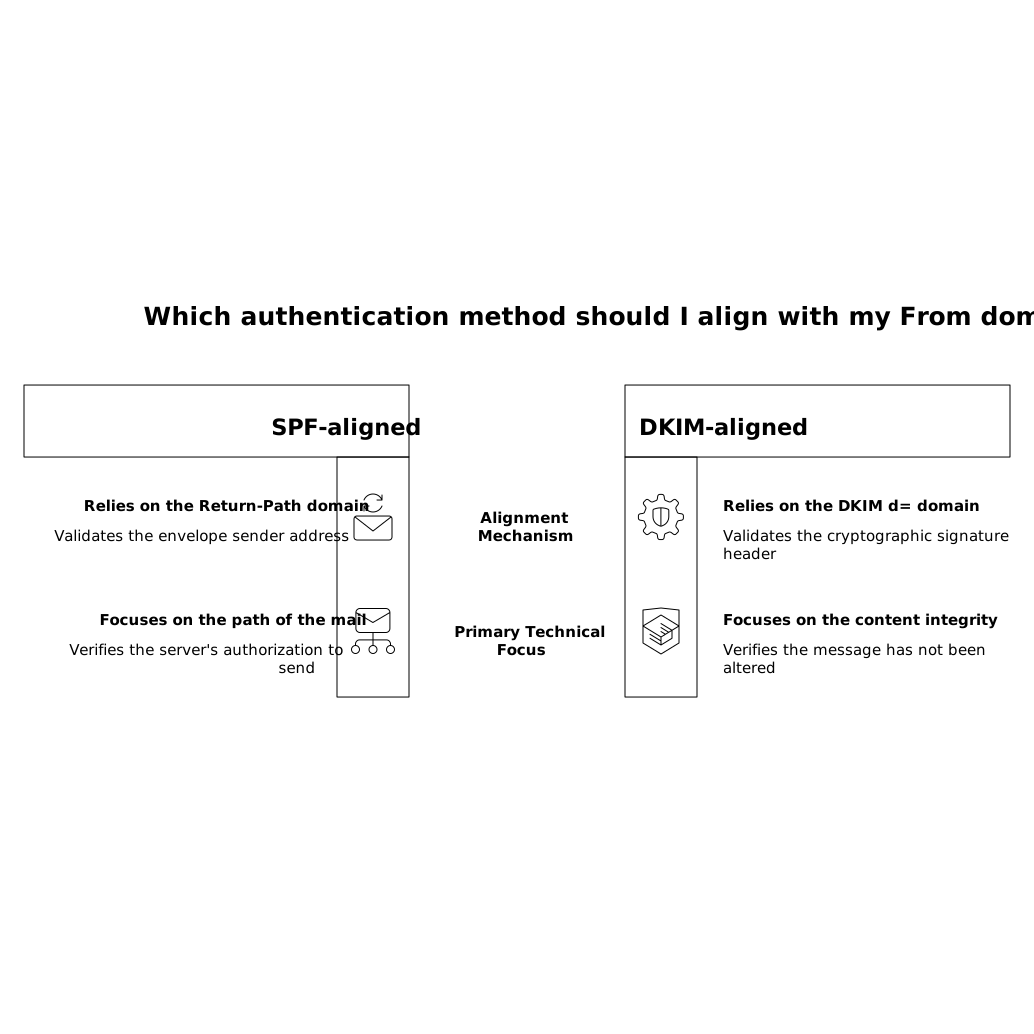
So the trap looks like this:
- SPF passes for mg.vendor-mail.net
- From is company.com
- DKIM either fails, is missing, or signs as vendor-mail.net
- DMARC fails (no aligned identifier), or “passes” only in edge cases while still looking inconsistent
Even when DMARC technically passes (for example, via DKIM alignment on a subdomain you didn’t intend to represent the brand), you can still see spam placement if the overall identity and engagement history look off. If you’re dealing with that scenario, the deliverability angle is covered more directly in Why DMARC Pass Still Sends Email to Spam and How Warmup Signals Restore Trust.
Subdomains can silently break alignment
Subdomains are useful for separating traffic (transactional vs. sales outreach) and protecting your root domain reputation. The risk is that teams configure authentication on one domain while sending with another.
Two common misalignments:
1) From uses the root domain, but authentication uses a subdomain
You send From @company.com, but your ESP sets Return-Path to bounces@mail.company.com and DKIM d= to mail.company.com. Depending on your DMARC alignment mode, this may or may not align.
If you intend to send as @company.com, you need to be explicit about how your ESP signs DKIM and sets the envelope-from so that alignment matches your DMARC policy.
2) From uses a subdomain, but your policy/reporting assumes the root
Teams often publish DMARC at company.com but send from sales.company.com without confirming how subdomain policy applies. The result is fragmented reporting and inconsistent enforcement across traffic types.
Return-Path mismatch is normal, but it has consequences
Many providers and ESPs use a distinct bounce domain to handle deliverability engineering and complaint processing. That setup can be perfectly legitimate.
The issue arises when:
- the bounce domain is on a completely different organizational domain,
- SPF passes only for that vendor domain,
- DKIM isn’t aligned to your From domain,
- and recipients are being asked to trust company.com without a clear authenticated tie.
Mailbox providers don’t just evaluate whether a check passes. They evaluate whether the authenticated identity matches the presented identity and whether that identity has a stable history of wanted mail.
DKIM mismatch is the most common “it passes but it’s still bad” culprit
DKIM is where you can anchor brand identity, because the signing domain (the d=) can be set to align with the From domain. But in practice, DKIM gets misconfigured in predictable ways:
- DKIM signs with the ESP’s domain instead of yours, so DMARC alignment fails unless you send from that same domain (rarely desirable).
- DKIM rotates or changes selectors without DNS being published consistently across environments.
- Multiple systems sign the same message, and the aligned signature fails while a non-aligned signature passes—leading to confusing “pass” signals in tools.
If you only fix one thing, fix DKIM alignment. A stable aligned DKIM signature tends to survive forwarding and mailing lists better than SPF alone.
Why inboxing can fail even when DMARC passes
Authentication is an entry requirement, not a guarantee. Once you authenticate, providers still score your mail based on reputation and behavior signals, including:
- new or low-history domains and subdomains,
- list quality and unknown-user rates,
- complaint rates and negative engagement,
- content patterns associated with low-value mail,
- inconsistent sending cadence that looks automated or bursty.
This is why teams that “fixed DMARC” can still see spam placement: the technical identity is now consistent enough to evaluate, but the reputation signals haven’t caught up.
A practical alignment checklist you can run from raw headers
Before changing DNS, pull a real message’s headers (from Gmail “Show original” or Microsoft “View message details”) and verify:
- From domain: the domain your recipients see.
- Return-Path domain: the envelope-from domain SPF authenticates.
- SPF result: pass/fail and which domain it applied to.
- DKIM d= domain: which domain is signing.
- DMARC result: pass/fail and whether it passed via SPF or DKIM alignment.
If either SPF or DKIM aligns with the From domain, DMARC can pass. If neither aligns, you’re in a guaranteed failure mode. If one aligns but the other points elsewhere, you’re in a common “technically acceptable, practically fragile” mode.
How warmup helps after you fix alignment
Once alignment is correct, you still need to earn trust—especially on new subdomains, new inboxes, or after switching ESPs. Warmup matters here because it builds consistent positive engagement and mailbox-level history in a controlled way.
mailwarm is designed for this specific gap between “authentication is correct” and “inboxing is reliable.” By simulating realistic interactions across major providers and generating engagement signals (opens, replies, and spam recovery actions) through a large network of real inboxes, it helps establish the behavioral footprint that authentication alone can’t create.
The sequencing is important: fix alignment first (so providers can attribute reputation correctly), then build steady trust signals (so that identity is rewarded with inbox placement).
Vertical Video