Why internal webhooks fail in practice
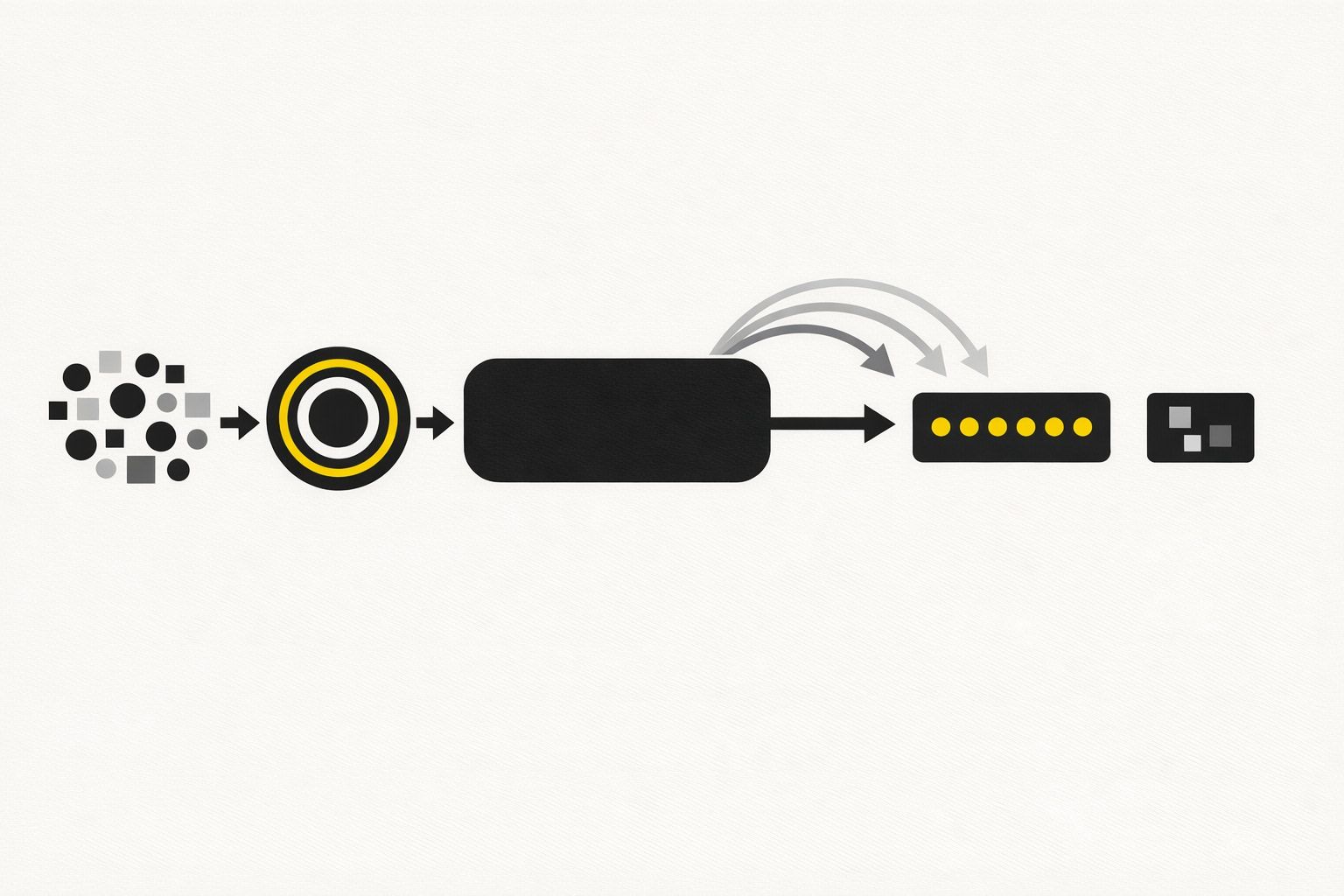
Internal webhook endpoints often start life as “just an HTTP handler” connecting systems like billing, data pipelines, CRMs, and internal tools. The first incident usually arrives the same way: a timeout causes the sender to retry, two requests land, and your system performs the side effect twice—creating duplicate invoices, double‑provisioning, or firing the same workflow run multiple times. The fix is not adding more guards in business logic ad hoc; it’s implementing three reliability primitives that make webhook processing predictable under failure: idempotency keys, controlled retries, and a dead‑letter queue (DLQ) for the cases you can’t resolve automatically.
The good news is you can harden endpoints without building a “platform team” product. You need a small set of conventions, a durable store, and an execution surface that provides observability and operational hooks. A code‑first internal automation layer like windmill.dev is often a pragmatic fit: you can expose scripts as endpoints, model multi‑step processing as workflows, and get logs/alerts without inventing everything from scratch.
Idempotency keys that actually hold up
What idempotency must guarantee
Idempotency for webhooks is not “don’t run twice” in the abstract. It’s “for the same logical event, produce the same effect at most once.” That means you need a deterministic way to recognize replays and duplicates across timeouts, network retries, and manual re-sends.
At minimum, an idempotency design should provide:
- A stable key per logical event (from the sender if possible).
- A durable record of what you did for that key (not in-memory).
- Mutual exclusion to prevent races when duplicates arrive concurrently.
- A clear retention policy so the store doesn’t grow unbounded.
Choosing the key
If the producer already sends an event ID (common in modern systems), use it as the idempotency key. If not, require an Idempotency-Key header for callers you control. As a last resort, derive a key from canonicalized fields (e.g., source + timestamp + entity_id + payload hash). Be careful: derived keys can drift if optional fields reorder or if producers change serialization.
For internal systems, the simplest contract is: every webhook request must include Idempotency-Key and a X-Request-Timestamp you can validate for replay windows.
Persistence pattern: “reserve, then commit”
A common failure mode is writing a “processed” record only after work completes. If the process crashes mid-flight, you have no record and will re-run from scratch. Instead:
- Reserve the idempotency key with status
processingusing an atomic insert (unique constraint on key). - If insert fails because the key exists:
- If status is
succeeded, return the stored response (or a 200 with a “duplicate” marker). - If status is
processing, return a 202 and let the sender retry later (or block briefly with a lock, depending on your latency budget). - If status is
failed, decide whether to allow reprocessing based on failure type and a retry counter.
- If status is
- Commit the outcome: set status to
succeededand store any relevant result identifiers (invoice ID, job run ID), plus a compact response.
This is straightforward in PostgreSQL with a unique index and INSERT ... ON CONFLICT. It also maps well to internal workflow engines because you can persist the state in a database and keep execution stateless.
Retention and cardinality
Keep idempotency records long enough to cover realistic retry windows and operational replays. For many internal integrations, 7–30 days is a practical default, but pick a number that matches how your systems behave. Purge by TTL, and store only what you need: key, status, timestamps, a small response, and a pointer to logs rather than full payloads.
Retries without creating duplicate side effects
Separate transport retries from business retries
Webhooks are “push,” so the sender typically owns transport retries: if they don’t get a 2xx quickly, they retry. Your endpoint’s job is to respond fast and make processing safe.
A robust pattern is:
- Acknowledge quickly (200/202) after persisting the idempotency reservation.
- Process asynchronously via a job queue or workflow run.
- Use controlled internal retries for transient errors (timeouts, rate limits, temporary DB issues).
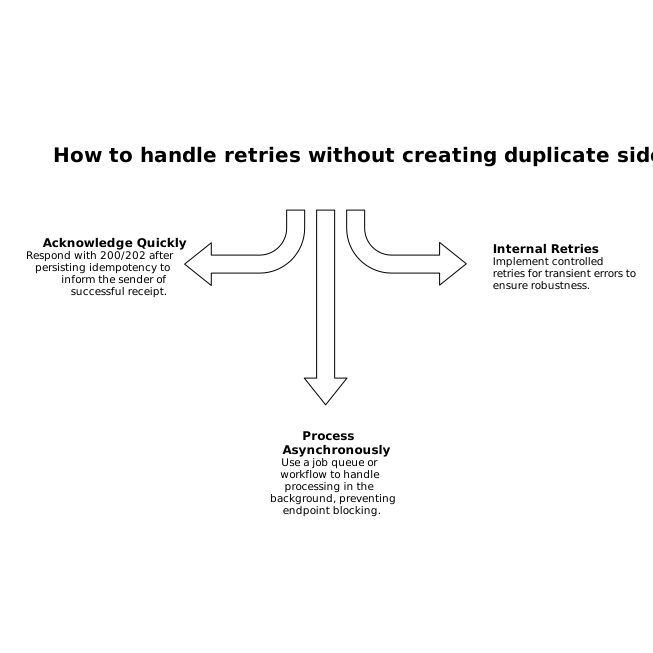
This prevents the worst case where a slow handler triggers multiple sender retries that all execute the same work concurrently.
Backoff, jitter, and retry budgets
Retries should be deliberate and bounded. Use exponential backoff with jitter to avoid thundering herds, and cap both the number of attempts and total retry time. A typical internal policy might be 5–8 attempts with a max delay of a few minutes, but align it with your SLOs and the downstream dependency behavior.
Also distinguish transient from permanent failures. A 429 from an internal API might warrant retry; a validation error on missing fields should not. The earlier you classify failures, the less noise you create.
Idempotency across multi-step workflows
Even if the initial webhook is idempotent, downstream steps can still duplicate side effects if they are retried independently. The clean approach is to carry the idempotency key through every step and ensure that any external side effect (create user, charge card, publish message) is either:
- idempotent itself (supports its own idempotency key), or
- wrapped with a local “exactly-once” guard (unique constraint on business identifier).
This is where modeling the processing as a DAG workflow can help: each node has explicit inputs/outputs, retry policy, and observability, instead of hidden retries scattered in ad hoc code.
Dead-letter queues for the failures you can’t auto-fix
When a DLQ is the right tool
A DLQ is not just for message brokers. Conceptually, it’s a durable place to put events that failed processing after exhausting retries, with enough context to diagnose and replay safely. Webhooks need DLQs because some failures require human action: schema mismatches, permissions, missing upstream records, or unexpected downstream behavior.
What to store in a DLQ record
A useful DLQ entry contains:
- Idempotency key and source system
- Original payload (or a pointer to encrypted storage if large/sensitive)
- Error classification and stack trace/log reference
- Attempt count and timestamps
- A replay policy (can replay automatically after fix vs manual only)
Make DLQ browsing and replay a first-class operational path. If it’s painful, engineers will “just re-send” manually and reintroduce duplication risk.
Safe replay mechanics
Replays must reuse the original idempotency key. That way, a replay either completes the missing work or returns the already-completed result. If you generate a new key on replay, you’ve effectively turned your DLQ into a duplication machine.
Putting it together without building a platform
A minimal architecture that scales
You can implement the trio—idempotency, retries, DLQ—with a small number of components:
- Endpoint handler that authenticates, validates, reserves the idempotency key, and enqueues work
- Durable database tables for idempotency state and DLQ entries
- Worker execution with per-step retries and good logs
- Alerting on DLQ growth and sustained failure rates
Windmill fits naturally into this shape because scripts can be exposed as endpoints and orchestrated as workflows with built-in logs and operational visibility, while still letting teams write real code in their preferred language.
Operational guardrails that prevent “silent failure”
Hardening is incomplete without runbooks and observability:
- Alert on DLQ inserts above a threshold per hour/day.
- Track duplicate rate (idempotency conflicts) as a signal of upstream instability.
- Log the idempotency key in every step for traceability.
- Document replay steps and ownership per integration.
If you already maintain email deliverability or security tooling, you’ll recognize the pattern: trust is earned through consistent signals and clear failure handling. The same mindset applies to internal webhook reliability. For a related example of how “passing checks” still isn’t the full story, see the internal piece on why DMARC pass can still land email in spam and how operational signals restore trust.
Practical checklist for your next webhook
- Require an idempotency key and store it with a unique constraint.
- Reserve the key before doing side effects; commit success with a stored result.
- Acknowledge quickly; process asynchronously.
- Use bounded retries with backoff and jitter; classify transient vs permanent errors.
- On permanent failure, write a DLQ record with replay metadata.
- Replay using the original idempotency key, not a new one.
- Instrument duplicate rate, retry rate, and DLQ volume with alerts.